
This post is a transcription of an interview on the Abundant Blooms YouTube channel between Abundant owner Ruth Ann and Rooted founder Amelia Ihlo. View the video here, or read our transcription of the conversation!
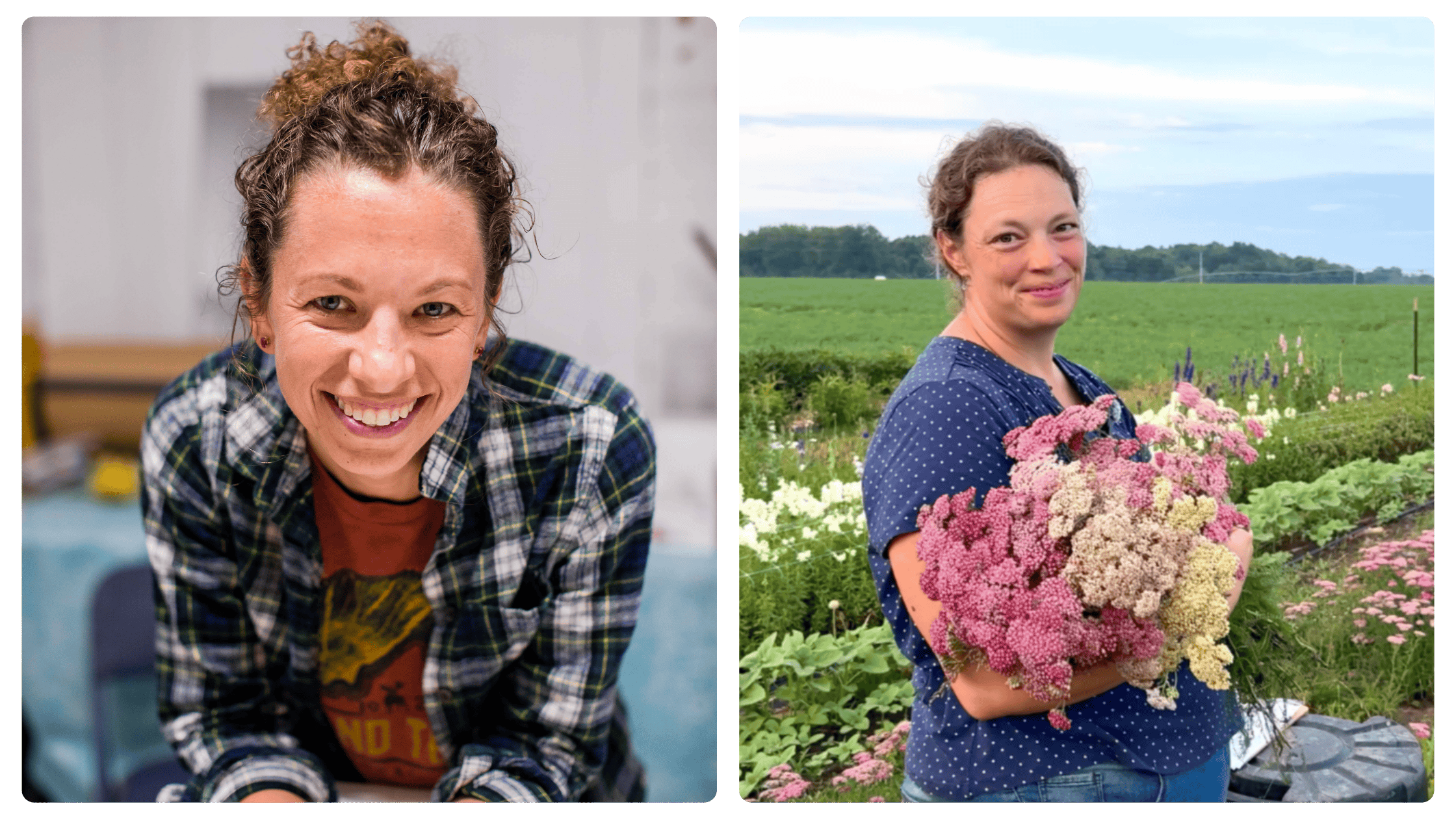
Ruth Ann
Today, we're in for a really special treat. We have Amelia Ihlo with us from Rooted Farmers. She is the founder of Rooted Farmers and she is going to be walking us through different things about Rooted Farmers — what it is, why it came about, and how you can utilize it for your farm. Welcome, Amelia.
Amelia
Thank you, Ruth Ann. I'm glad to be here. It's been fun watching your journey as you've been building this YouTube community and knowing where we started years ago, kind of just figuring it out together.
Ruth Ann
I joined Rooted in 2021, and Rooted has grown a lot since then, which has been a really fun thing to watch. When I joined Rooted you told me I was the first farmer on Rooted in West Michigan.
Amelia
Yes! I still remember our early conversations — I remember pulling over on the side of the road because I knew my cell phone would cut out. We live in rural New Hampshire and I'd just lose cell service. It's been really fun to watch that grow together.
Background & Origin of Rooted Farmers
Ruth Ann
Can you tell us a little about your farming background and what inspired you to start Rooted Farmers?
Amelia
Sure. My foray into farming started from my career in finance — I spent close to 15 years working in finance. At a certain point, with my three kids getting older, I was feeling like finance wasn't the most fulfilling thing I could be doing. I really wanted to be farming. I'd grown up around farms and worked on farms in college.
I started a flower farm in 2016–2017. Just like most of us, I didn't know what I didn't know. It was a very steep learning curve, learning how to grow for production. But coming from an industry where technology is so heavily integrated into everything, I was struck by the lack of technology and resources really built for us as growers — intentionally designed for our needs. That was the initial catalyst — it was odd that this was a problem that hasn’t been solved already.
In winter 2018–2019, I started a hub of growers here in New Hampshire, near the Vermont border, and we were selling down into the Boston area. I was managing everything in a very manual way — availability lists, a lot of Excel, email, photos, inventory, orders, communication, payments, and the entire workflow for our farm and all the growers in our hub. My husband and I were sitting up at 3:00 in the morning elbowing each other just trying to keep up. It wasn't scalable — it wasn’t going to work over the long run, and wasn’t even working for that season.
So I started working on this idea of an "Etsy but for flower farms" — where growers upload their inventory into their own profile, it aggregates across all of us, and buyers can shop across all the farms. The goal was to build this tool that served as a marketplace for growers and buyers. We launched that in August 2019.
Instantly, our buyers doubled or tripled what they were spending with us. We were shocked. Why did that happen? Why were they suddenly spending so much more with us? When we researched what was holding them back from spending more money with the previous systems, it all boiled down to how we communicated about our product, what we communicated, and the ease of purchasing. If we could preempt all their questions and serve them the most important information in a language that made sense to them, they'd spend more. And if they spent more, we were more profitable.
That was the aha moment. If we can create this outcome for our farms, are we able to solve this problem broadly for growers across the board?
Ruth Ann
Were there any other pain points that made you create Rooted?
Amelia
We all get into farming because we love growing, the production, the experience of cultivating products, and cultivating relationships. We don’t want to let go of that, but it takes a lot of time. There’s a lot of layers of business. If you’re operating manually, you add up all that time, which is coming at the expense of spending time with your family, growing product, harvesting, and building relationships. These manual systems could be automated.
Ruth Ann
One of things Rooted does for me and my business is analytics. That was something that has evolved. It’s interesting to know you didn’t start with that in mind, but it’s become more beneficial and is such a valuable part of Rooted now.
Amelia
That’s true. That was not the first problem we were trying to solve. We were trying to solve communication challenges because so many things broke down between buyers and sellers based around communication. I would refer to things in Latin terms, and my buyers would just need a pink focal flower and not know what those things are when they read them in a list.
We needed a translation layer where growers could refer to the genus, species, etc, and the common names are automatically populated. The design and pricing factors are all managed on the back end. Then a buyer can shop by color palette or design elements, and all those items are filtered. It’s a way to shop that’s intuitive for them, so they can shop in terms of their recipes.
Then, we realized that we can automate all the analytics. We can look back at this year compared to last year for sales. We can look at which colors sold particularly well over a time period. What was my product mix? How did that shift compared to last year?
We’ll take a look at all those analytics in a little while. What’s been so fun for us at Rooted is hearing all the feedback from growers and being able to turn that into new tools.
What Is Rooted Farmers?
Ruth Ann
Can you just define what Rooted Farmers is for someone who's never heard of it?
Amelia
Rooted is an inventory management tool for growers and a marketplace where buyers and sellers can connect. Think of it like Facebook or LinkedIn — you create a network. As a grower, you can discover new buyers in your area. As a buyer, you can discover new sellers nearby.
When a new grower joins, buyers are prompted to connect with them. But you, as a grower, are always in control — we'll never opt you into selling to someone without your approval. The marketplace is one of the key differences from a lot of other platforms out there. We’ve done grower surveys and found that more than 80% of our growers have grown their network meaningfully since joining Rooted.
There is the potential to build new relationships with what we'd call "warm leads" — people who are already looking for local flowers, motivated to source locally, and within your radius. People you might never have thought to reach out to.
Ruth Ann
Some florists get confused about what Rooted is — they'll buy from another farm that also uses Rooted and think they're buying from the same place. Can you explain it from a florist's perspective?
Amelia
It can happen, especially with florists who've been in the business a long time and aren't as plugged into tech. The messaging from you as a grower is: "We use Rooted to sell our flowers. A good comparison is Etsy — we list our products there, and other growers do too, but we're separate shops.”
It's really a rising tide lifts all boats situation. You might worry that being in a marketplace makes it easy for your buyers to find other growers, but what we've found is that everybody sells more because we've solved so many problems for buyers. You're not really competing against each other — you're competing with importers. Buyers prefer local, and if we reduce friction by bringing more growers together into a one-stop shop, buyers end up spending a lot more money with all of us.
We also make it very clear at checkout — it splits orders in bright red font and sends two separate order confirmations, so buyers know exactly which farm each item is coming from.
Applying to Become a Seller
Ruth Ann
Can you explain the process of applying to become a seller on Rooted Farmers?
Amelia
You'd navigate to rootedfarmers.com and click Sign Up in the upper right corner. You'll set a username and password, then choose whether you want to buy or sell. If you're a grower, you'd choose "sell," then indicate whether you're a farm or a hub, and what type.
Unlike Etsy, Rooted is a curated marketplace — we vet everyone who joins. On the buyer side, we make sure you're a legitimate wholesale business and should not be paying sales tax. On the grower side, we're upholding our commitments to wholesale buyers — more than half the volume that transacts on Rooted goes wholesale. Those customers need to feel confident that they are working with growers who really understand the differences between selling retail and wholesale.
For grower applicants, we're looking at years of growing experience, all your sales channels, harvest practices, social media, and website. We're looking for photo evidence that you're an experienced grower prepared to work with wholesale buyers. We don't have hard and fast rules, but we're all farmers reviewing these applications, so we have a good sense of what we're looking for. If someone doesn't quite meet criteria, we'll ask for more information and go back and forth.
Ruth Ann
What advice do you have for a farmer who wants to sell wholesale but isn't quite ready to join Rooted yet?
Amelia
Rooted works for food and flower production. For a flower applicant specifically: not having wholesale experience isn't automatically a dealbreaker. We'd look for other indicators — like, are you a farmer-florist who really understands harvest stages and end use of the product? If you’ve grown for a couple of years but never sold wholesale, we might ask you “Have you thought about selling wholesale? Have you tried building any relationships with florists? How has that gone?” Our network in Rooted is never a substitute for you as a grower building lasting relationships with your buyers. Florists want to know their farmer, the product, and be able to give feedback. We’ll continue to have a dialogue around that.
If we get an applicant who is a year-zero grower, our response is different. If you have never grown at production scale and never sold wholesale, we'll ask you to go back and take a year or two to work out the kinks. Those first two years of growing are brutal. Stepping into commercial cut flower production is different, and you need time to figure out what you don't know before stepping into higher-stakes relationships with event florists who are putting their reputation on the line.
Communicating with Florists Before Joining Rooted
Ruth Ann
If someone can't join Rooted yet, how should they communicate with florists?
Amelia
Ask your florists their preferred method. Walk into your local florists, have a conversation, understand how they're comfortable building a relationship with you. Some will say, "Just stop by every week with buckets so I can see the quality." Others will say, "Text me or DM me what you have available." It really depends on what your florists are used to. Your first goal is to understand how they like to work and make sure you're meeting their expectations on quality. The system can always come later — but it's never a substitute for really high-quality product.
Ruth Ann
That's how I started. I had two florists who knew I was coming every Tuesday — no minimums, just showing up. With a third, I called every Monday after harvest because she preferred a phone call.
Amelia
You hit on two crucial things for your first year of selling wholesale. The first is trust — you want to show up even when they're not buying. Leave things behind. Your sales are a long game, not a short game. They've spent years building their own business and reputation, and they need to be really sure you know what you're doing before switching their sourcing to you.
The second is consistency. If you're committing to these buyers, they want to know you're going to be there every week, same day, same schedule. That consistency — hitting every Monday phone call and every Tuesday bucket drop — is huge. If you nail those two things in your first year, you're going to learn so much.
Ruth Ann
I still sell to all three of those florists today — this is my fifth season with them.
What I learned the second year was that they all pretty much doubled their buying. It caps out eventually, but that year-one to year-two jump is real.
Now that I have a relationship with these florists, one of my florists told me she's always wary of new growers because one time she bought sunflowers from someone and they dropped pollen all over. I started with sunflowers, and I still sell her sunflowers every week.
Amelia
She's articulating what many buyers can't put into words: that's all about trust. She had a bad experience, it impacted her business, and now she needs you to prove it before she makes a change. That is the rule, not the exception. More than anything, we as growers are just building trust with our buyers.
Ruth Ann
I did bring her samples of sunflowers before I ever expected her to buy anything from me. That was how I started out, which worked really well for me.
Pricing & ROI
Ruth Ann
I hear from farmers that Rooted seems expensive or they're not sure it's worth it. Can you go over the pricing structure and why you'd make your money back?
Amelia
We have a hybrid pricing plan — a subscription fee and a transaction fee. The subscription fee keeps it manageable and ensures growers are serious, since we invest time in onboarding and support. We have a weekly Zoom Q&A call where we sit with you to answer questions and help you get set up. There's an Essentials tier and a Pro tier.
Impact on Farmer Sales
Ruth Ann
Can you share data on how Rooted has impacted farmer sales?
Amelia
We fielded a survey this year to quantify what we'd been hearing anecdotally. The results were really powerful. Number one: 92% of sellers saw an increase in sales, and 40% of them were more than doubling their sales. That second cohort is more than doubling what they were selling before joining Rooted, regardless of what systems they used before. That's huge.
Second: they're saving time. The average reported was over a full workday per week — that's like a couple months back over the whole year. And that's the average, so some are saving even more. Your business will be unique, but it has the potential to lift so much. You can put more time into other parts of your business, build more relationships, or even sit down for dinner with your family.
Ruth Ann
I can attest to this. Before Rooted had point of sale, I was writing orders on scraps of paper, shoving them in my purse, and coming home to write invoices — making mistakes. Rooted makes you super streamlined and professional and saves so much time.
Amelia
We kind of force you to streamline your work, and it’s more intuitive because we’re all farmers and hub managers. We know right away when something is not working.
The last result is the expansion of their network. We're the only true marketplace out there for farm perishable product. You have the potential for discovery. We’re never a replacement for that human relationship you build with your buyers, but we offer warm leads who are already looking for local flowers and within your radius. It becomes a selling point to buyers, too, because they only have to remember one login and shop in one place from multiple farms.
Ruth Ann
I’ve definitely benefitted from that as well. I also had a buyer last year find me through Rooted who I'd never heard of — they started placing significant pickup orders and I still sell to them this season. I would have never connected with them otherwise.
Amelia
Discovery is huge! Some of us may be introverts, and this can be a really helpful way to introduce yourself as a grower.
Ruth Ann
Last season, when I saw the email that alerted me of a new buyer connection. I was able to get their email address and send them a personal email to introduce myself. You can take it from there and personalize your relationship.
Amelia
As we're seeing businesses shifting away from that brick-and-mortar model — who may be home studios or event planners — this can help you find people who are off the beaten path or who may not have a social media presence.
— End of Part 1 —
Part 2: Amelia screen-shares a live walkthrough of the Rooted Farmers platform. Available here on Ruth Ann's YouTube channel.
Categories

About the Author
Rooted Farmers
The Rooted Farmers Team is happy to bring you content that we hope provides value. The topics covered range from farming and running a hub, to sales, marketing, and all things related to building your business, to the unique challenges faced by growers. Our philosophy in sharing this content is that we are always in a position to learn; embracing this mentality will only help us to grow, both within our businesses and personally. If there is a topic that you feel would be of value to the Rooted Farmers community, we encourage you to share your ideas with us by sending an email to: reachout@rootedfarmers.com